





View from beneath a shaded concrete overhang of a light stucco house exterior, mown lawn, trimmed shrubs and palm trees under an overcast sky.

AC Installation in Kapaa, HI

Tell us about the job

Takes about a minute. No obligation.

New system or replacementCentral ACKauai County, HI
Step 1 of 2

What ZIP code is the job in?

Electricity on Kauai runs 42.86 cents per kilowatthour, among the highest rates in the country. An air conditioner here earns back the difference in efficiency fast, because every hour it runs costs more than it would almost anywhere else on the mainland. Two systems with the same cooling capacity can pull very different amounts of power to do the same job, and at this rate that gap shows up on the bill every month. Before you pick a system, it's worth asking what it actually draws to cool this house, not just what it costs to install.

83°F
the average summer afternoon it cools against
13.4 SEER2
the federal minimum any new unit must meet
Isometric 3D cutaway render of a house with dark siding showing interior rooms, ductwork and an air handler, connected by lines to an outdoor condenser unit on a white background.
Your air conditioner works hardest from April through December.

NOAA 1991–2020 monthly normals

Electricity heats close to a third of homes in Kauai County, more than any other fuel.

An electric system matches what's already set up here, and in a market this dependent on the grid, how little it draws matters more than most places.

Cooling runs here every month of the year, not just in summer

Summer afternoons average 83°F
Power costs 42.86 cents a kWh statewide
Climate zone 1A

Kauai falls under zone 1A, and the federal minimum here is 13.4 SEER2 for the split system sizes used in most houses, not the higher floor the Southeast requires. Whatever goes in has to clear that bar at least. Given what power costs here, most homeowners end up looking well above the minimum, since the system they pick will run for years at this rate. A federal tax credit is available for equipment that qualifies at a higher efficiency, and it's worth asking about when you're comparing systems.

At 42.86 cents a kilowatt-hour, the system you pick matters more than the price tag

Get quotes on more than one system before deciding. Ask what each one draws to cool this house, not just what it costs to install. At this rate, that difference shows up on every bill for as long as the system runs.

Find a contractor
A man in a cap and work jacket, seen from behind, carries a canvas tool bag up wooden porch steps toward a red front door.
An outdoor air conditioning condenser unit mounted on a concrete pad surrounded by gravel, photographed against a partly cloudy blue sky.

This one doesn't get a season off

This one runs every month, not just the hot stretch. June, July and August push the afternoon to 83°F, and that's just the peak of a load that never really lets up. A system sized for this house handles that steady work without straining. One sized off the old unit, or off a guess, ends up cycling on and off instead of settling into a steady run, and that's harder on every part in it. Ask for a load calculation done for your house before you pick a system.

What the rating actually measures

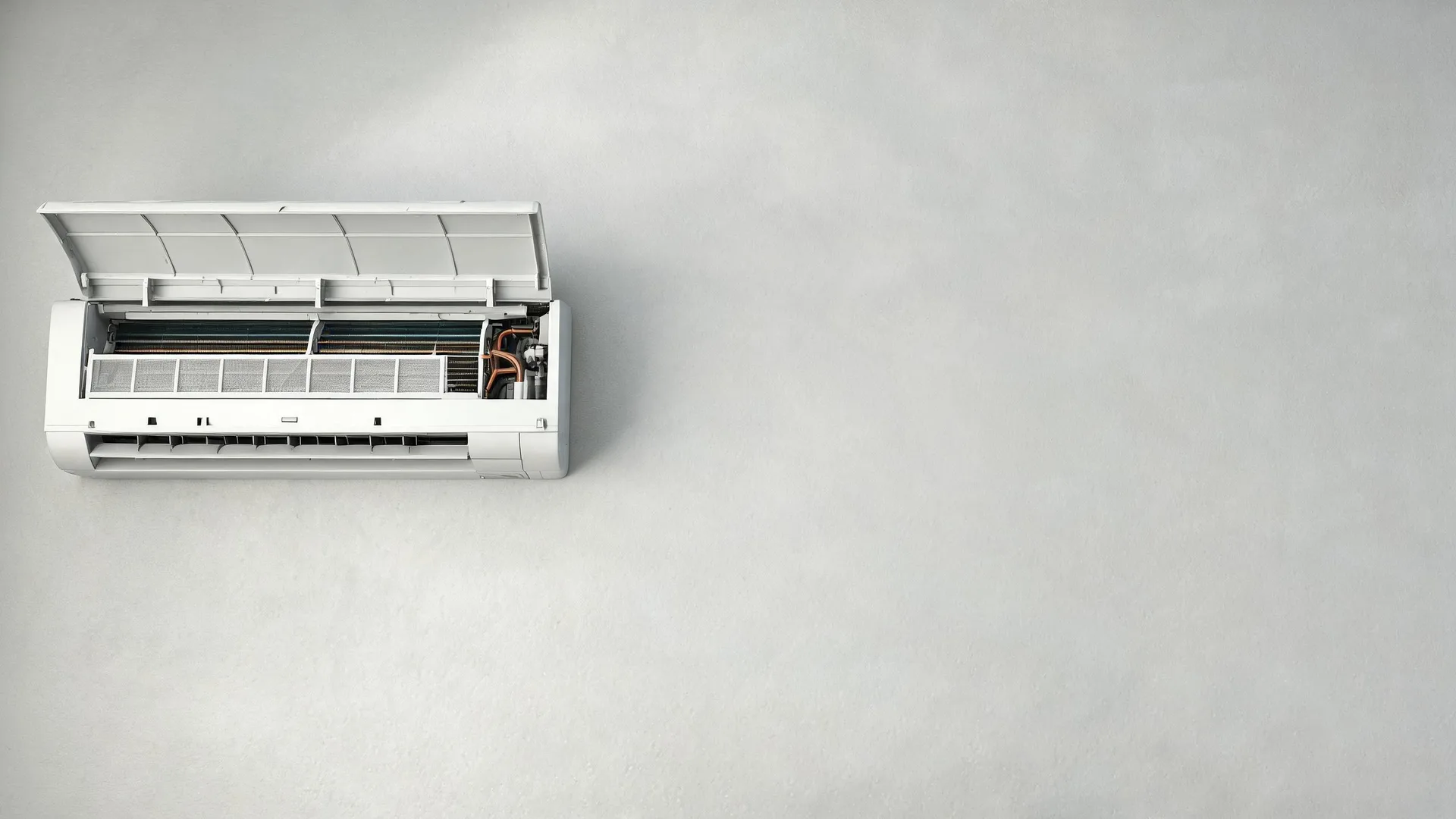
SEER2 compares the cooling a system delivers over a season against the electricity it draws to do it. A higher number means the same cooling job gets done with less power pulled from the wall. It has nothing to do with how big the system is or how fast it cools a room. Units can cool a house at the same speed and still pull very different amounts of power the whole time they're running.

Why it matters more after the sale than before it

The rating on the label doesn't change what you pay to install the system. It changes what that system draws every time it cycles on, for as long as you own it. A unit with a low rating isn't broken or undersized, it just costs more to run than one built to do the same job on less power. That difference doesn't show up until the system's been running for a while.

Aerial view of a gray outdoor air conditioning condenser unit mounted on a concrete pad next to a house with vinyl siding.

A higher-efficiency unit would save about $50 a year to run in Kauai County compared with a new unit at the federal minimum.

  • A higher-efficiency unit$840 a year
  • A new unit at the federal minimum, 14.3 SEER2$890 a year

Estimates for a typical Kauai County home, from EIA household energy data, Hawaii fuel prices and NOAA climate normals. Your home will differ.

Installation day starts with the crew confirming the load calculation and the equipment match before anything gets touched. The old equipment comes out first, the indoor coil, the outdoor unit, and the line set. A new line set goes in if the old one is the wrong size for the new system, since undersized lines make the compressor work harder than it should. The indoor coil goes in above or beside the furnace or air handler. The outdoor unit gets set on a pad with enough clearance around it to pull air freely. Once everything is connected, the lines get pulled into a vacuum to clear out air and moisture before refrigerant goes in, and the system gets charged to the exact weight the manufacturer specifies. Last comes startup and airflow checks, run long enough to see the system settle into a steady cycle instead of short cycling.