Once you send the form, finding a pro is off your list.
Your AC quits cooling on a muggy afternoon and the house starts climbing in temperature within the hour. If the unit hums but the fan won't spin, or the fan turns slow and struggles to get going, or the whole system clicks off and on instead of running steady, the capacitor is a likely reason. It's the part that gives the compressor and fan motor the jolt they need to start and keep running, and when it weakens, those motors can't do their job.
Running a failing capacitor doesn't fix itself. The compressor draws harder trying to start, the motor strains, and on a Hawaii electric bill that's already high, that strain shows up as more cost for less cooling. Left alone long enough, the extra draw can damage the compressor itself, which costs a lot more to replace than a capacitor does.
None of that means you need to spend your evening calling around. You don't have to track down contractors, explain the symptoms to three different answering services, and sit with a stack of quotes trying to figure out who actually knows what they're doing. That part of this is already handled.
Send the form below and the job of finding someone becomes someone else's problem, not yours. A licensed contractor familiar with Hawaii's AC systems takes it from there. You don't have to vet anyone or wonder if you called the right company. You just wait for the house to cool down again.
What are the signs of a bad AC capacitor?
Your AC has been acting up and you've heard a bad capacitor might be the cause. Before you call anyone, you want to know what you'd actually notice. A failing capacitor doesn't always kill the system outright. Sometimes it struggles for days or weeks first, and catching those signs early is what keeps a small part replacement from turning into a compressor problem on a hot Hawaii afternoon.
A humming unit, a slow fan, or an AC that won't start on the first try
The capacitor stores the charge that kicks the fan motor and compressor into motion. When it weakens, the motor doesn't get enough of a push to start spinning right away. You hear a hum but nothing moves, or the outdoor fan turns sluggishly like it's fighting to get going. Some units click off and on every few minutes instead of running steady, and some need two or three tries before they start at all. Warm air coming through the vents while the unit runs is another sign, since the compressor can't do its job without the capacitor's help. In Hawaii, where the AC runs most of the year, these signs tend to show up more often and get worse faster than they would somewhere with milder summers.
Running as it should
This is a unit doing its job. The fan spins the moment the system calls for cooling, the coil stays clear, and the condenser cycles on and runs steady until the house hits temperature. No clicking, no delay, no strain in the sound it makes.
Capacitor giving out
The coil guards are caked with dust and debris, the fan hesitates or won't start on its own, and the unit may click and reset instead of running through. A capacitor working this hard to start the system is closer to leaving you without cooling altogether.
Failing or Already Failed
Capacitor is failing
The fan or compressor hesitates for a second or two before it starts, instead of kicking on right away.
You hear a faint clicking or humming from the outdoor unit as it tries and fails to get the motor going.
The system short cycles, shutting off a few minutes after it starts and then trying again on its own.
Cooling gets weaker through the afternoon even though the thermostat hasn't changed.
The outdoor fan spins slowly or needs a push to get going, if you can see it from where the panel is.
Your electric bill climbs because the compressor is pulling harder to start each cycle.
Capacitor has failed
The outdoor unit is dead silent when the system calls for cooling, no hum, no click, nothing.
The indoor blower may still run and blow air, but that air isn't cold because the compressor outside never starts.
The breaker hasn't tripped and the thermostat shows it's calling for cooling, so the stoppage is at the unit itself.
House temperature climbs steadily with no cooling cycles at all, not even short, weak ones.
A burnt smell or visible bulge on the capacitor itself, if the panel is open, means it's already gone.
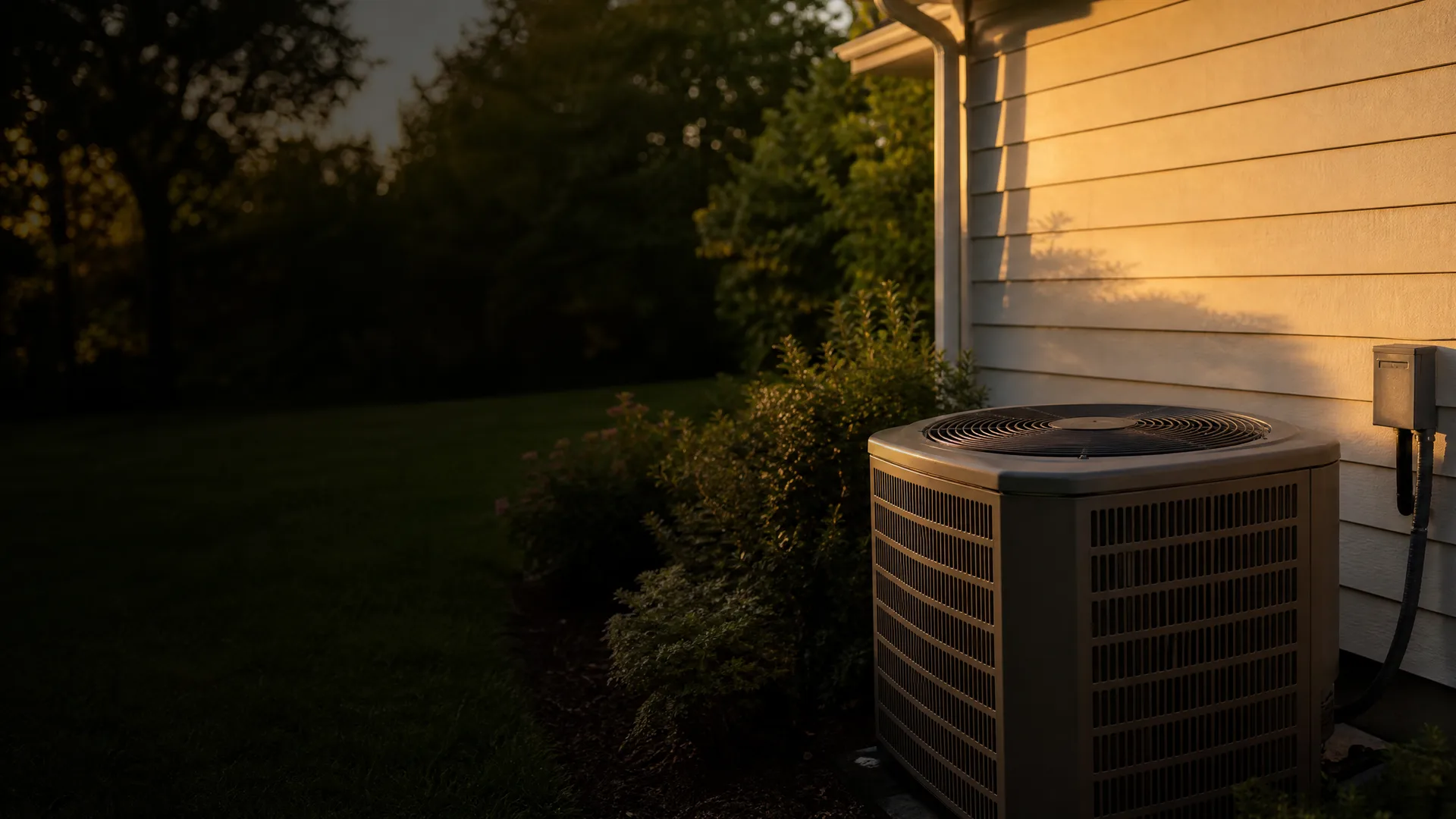
Almost eight and the light's still going gold over the yard. You're out there after dinner, slippers on, and you notice the condenser isn't making its usual sound. You get closer and the fan blades are just sitting still. The unit's humming low, trying. Inside, the house has that thick August feeling already settling into the walls. You crouch down and look at the fan, half expecting it to catch and spin on its own. It doesn't. You stand back up and just look at it for a second, listening to that hum keep going nowhere.
Answer a few questions instead of calling shop after shop.
Sending the form costs nothing.
1
The thermostat calls for cooling and sends power to the unit.
2
The capacitor stores a charge and releases it into the motor.
3
That jolt of power spins the fan or compressor into motion.
4
A weak capacitor delivers less charge, so the motor hesitates or stalls.
What a bad capacitor costs you in July heat
In Hawaii, a struggling capacitor rarely gets a quiet moment to fail. The outdoor unit is working against heat and humidity most of the day, every day, so a motor that hesitates to start ends up straining through dozens of cycles before anyone notices the sound has changed. That strain lands on your power bill before it lands on anything else. A compressor that labors to start draws more current trying to get going, and with power costs what they are here, a few weeks of that adds up on a bill you'd rather not study too closely.
Left alone, a weak capacitor usually takes the compressor down with it. That's the expensive part of the system, and it's not a quick swap. If you'd rather not spend an evening calling around, explaining the humming and the slow fan to three different companies, then sitting on quotes trying to guess who's honest, sending one form here does that part for you. You get matched with a licensed contractor and the rest stops being your problem to chase down.
Power costs 40.40 cents per kilowatt-hour statewide
At 40.40 cents per kilowatt-hour, your AC is already one of the biggest draws on your bill. A capacitor that's weakening makes the compressor and fan motor pull harder to start and run, so that strain shows up as higher charges before the unit ever fully quits.
EIA-861 2025 statewide residential average
Working the way it should
The condenser sits clean on its pad, fins clear, case free of grime. Refrigerant lines run straight into the wall. It starts the moment the thermostat calls for it and runs steady until the house cools.
A capacitor on its way out
Years of weather have left the fins caked and the casing dulled. A unit like this works harder to start and keeps running longer to catch up, and that strain is often where a capacitor starts to give.
What would you actually be noticing right now
Walk past the condenser and listen. A slow start, a hum that drags on before the fan catches, or no fan movement at all while the unit tries anyway. Inside, the air from the vents feels weaker than it should, or the house takes longer to cool than it used to on the same kind of afternoon. You might notice the system shutting off on its own and restarting a few minutes later, over and over. None of this means the AC is finished. It means the motor is struggling to start and stay running. Left alone through enough muggy afternoons, that strain tends to end in the compressor itself failing, which is a far bigger job than the capacitor that caused it.
The coil is clean and the cage is clear, so air moves through the condenser the way it was built to.
Dirt packed into the fins makes the system labor to push heat outside, and a weak capacitor fails faster under that load.
That muggy air you live with all summer carries a dew point around 68°F, averaged across June, July and August. That's heavy, saturated air, and it means the heat your AC pulls out of the house doesn't let go easy once it reaches the condenser outside. A sound capacitor gets the fan and compressor spinning fast enough to keep up with that load. A weak one can't deliver the jolt the motor needs, so the fan lags or stalls right when the air is thickest and the system needs the most push. That's when you notice the house not cooling down even though the unit is running.
NASA POWER T2MDEW county cells weighted by homes
A slow start, a hum without a spin, a system that clicks off before the house cools down. Those are the signs, and once you've caught one of them, the capacitor is the likely reason. It's a small part, but it's the one that gets the fan and compressor moving, and in Hawaii's heat there's no slow season where a weak one gets to coast. You don't have to track down a contractor, call around to see who answers, explain the clicking and the hesitation over and over to whoever picks up, then sit with a stack of quotes trying to guess who's worth it. Send the details once and that search stops being your problem. The unit either needs a new capacitor or it doesn't, and someone licensed to open the panel and test it can tell you which. You've already done the part that matters, which is catching it before the compressor underneath takes the damage.
Air Conditioner Repair
Send one request and you're done looking
Describe your air conditioner job, and a local pro who handles it gets in touch.
Say what's going on with your air conditioner, and a pro who works on them reaches out.
Send the request and finding a pro stops being your problem.
After this form, you can stop searching for an air conditioner pro.
Fill out one short form instead of calling around.
Explain the job once and skip repeating it on every call.
Your request goes to one pro, not a list of companies.