






An outdoor air conditioning condenser unit installed beside the exterior wall of a blue vinyl-sided house at sunset.

AC Maintenance in Honolulu, HI

Tell us about the job

Takes about a minute. No obligation.

Tune-up, service, or cleaningCentral ACHonolulu County, HI
Step 1 of 2

What ZIP code is the job in?

Electricity in Hawaii ran 42.86 cents per kilowatthour in 2024, well above what most of the country pays. Your AC is probably running most months of the year here, so every bit of lost efficiency shows up on the bill fast. A dirty coil or a low refrigerant charge makes the compressor work harder to do the same job, and that extra draw adds up month after month. A unit that's falling behind on maintenance doesn't announce itself. It just costs more to run than it should.

85°F
the average summer afternoon it cools against
1 hail events
in ten years, and hail bends the fins on outdoor coils
58 wind events
in ten years, and wind drives debris into outdoor units
Isometric line illustration of a cutaway house showing interior rooms, a furnace or air handler with ductwork, and an outdoor condenser unit beside the building.
Your air conditioner works hardest from March through December.

NOAA 1991–2020 monthly normals

A clean filter is the one thing a homeowner can check without a wrench.

Rinse or swap it on a set schedule, and the coil behind it stays cleaner too.

Your AC never gets a season off here, so neither do its parts

Summer afternoons average 85°F
Power costs 42.86 cents a kWh statewide
Climate zone 1A
Skip the tune-up, pay for it every month afterHonolulu power runs 42.86 cents a kilowatt-hour, so a neglected AC costs more here than almost anywhere else

A technician can catch a weak capacitor or a dirty coil before it quits in July. That's the point of getting on a schedule now rather than waiting for the first hot stretch to find out something's wrong. With highs averaging 85°F all summer, a unit that's falling behind doesn't get a cool stretch to catch up in. Have it looked at before the season leans on it hardest.

A tune-up pays for itself here

A neglected system uses more power, and power costs more here. A tune-up pays for itself.

Find a contractor
A gray metal air conditioning condenser unit mounted on a concrete pad in a flat grassy field under a partly cloudy sky.

What's wearing out doesn't look worn

Refrigerant charge is the one that catches people off guard. A system can be low and still blow cold air at the vent, just not as cold as it should, and not for as long before the compressor has to kick back on. You won't see that from the thermostat. A gauge set on the lines will. The same goes for the contactor and capacitor that get the compressor started and keep it running. Both wear from ordinary cycling, not from anything going wrong, and both tend to fail without much warning. A tech checks their readings against what they should be and replaces what's trending toward the end rather than waiting for the no-start call. None of this shows up by looking at the unit from across the yard.

The sound changes before the cooling does

Listen to the outdoor unit when it kicks on. A new rattle, a hum that wasn't there before, a click that takes longer to turn into a run, these mean a part is working harder than it used to. The compressor and fan motor both give some warning in sound before they give out. Most people never stand next to the unit long enough to notice.
Warm air at the end of a long run is a sign, not a fluke

If the house takes longer to cool than it did, or the air at the vent feels less cold toward the end of a cycle, something upstream is losing ground, a weak capacitor, a coil that can't shed heat, a charge that's drifted low. Any one of these gets worse slowly enough that you adjust without noticing. A check catches what your own sense of normal has already stopped flagging.

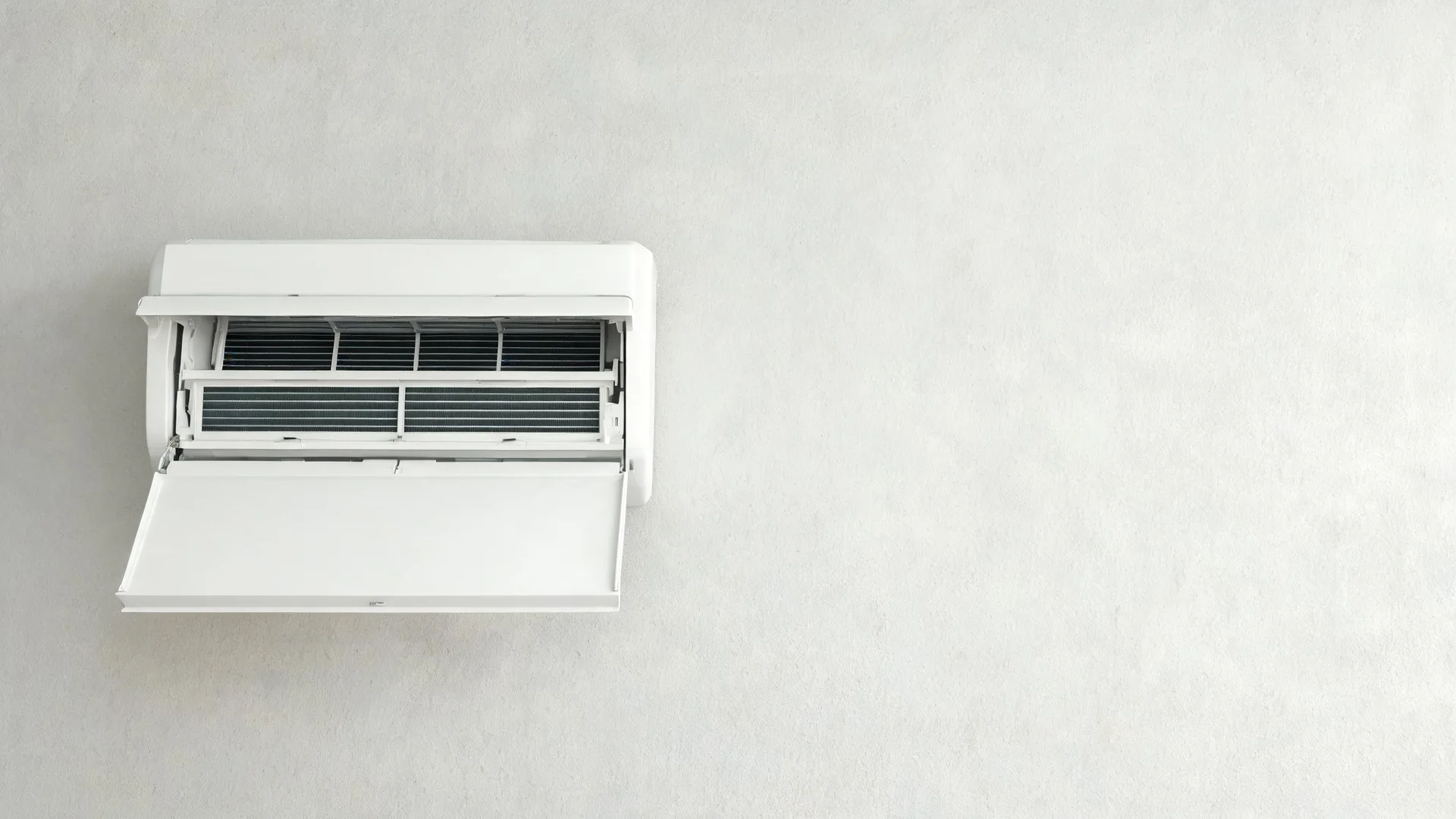
The filter is the only line of defense the coil has. Once it loads up with dust, air stops moving through it the way it should, and the evaporator coil behind it starts picking up what the filter missed. A dirty coil can't shed heat into the air passing over it, so the system runs longer to reach the same temperature. Outside, the condenser coil has the same problem in reverse, fighting to dump heat with fins packed full of debris. The drain line is the quiet one. It carries condensation out of the house, and when it clogs, that water backs up into the pan and sometimes past it. A system can be cooling fine one day and sitting in standing water the next, with no warning in between.

A tune-up is more than a filter change. A tech pulls the panel and checks the capacitor and contactor under load, not just by looking at them, because both can read fine sitting still and fail the moment the compressor asks something of them. The coil gets inspected on both sides, indoor and outdoor, and cleaned if it's holding dust that a filter alone won't catch. Refrigerant charge gets checked against what the system calls for, not just topped off on a guess. The condensate line gets cleared so it isn't the thing that fails next. Blower wheel, electrical connections, the start sequence itself, all get looked at while the system is apart, because that's the only time most of this is visible at all.