



Aerial view of a residential air conditioning condenser unit mounted on a concrete pad next to a house with vinyl siding and a sliding glass door.

AC Maintenance in Kapaa, HI

Tell us about the job

Takes about a minute. No obligation.

Tune-up, service, or cleaningCentral ACKauai County, HI
Step 1 of 2

What ZIP code is the job in?

Electricity in Hawaii runs 42.86 cents per kilowatthour, among the highest rates in the country. A dirty coil or a low refrigerant charge makes the compressor work harder to cool the same air, and that extra work shows up on the bill every single month. On the mainland a neglected system might waste a few dollars a month without anyone noticing. Here that waste gets charged at nearly triple the national rate. A system that runs year round in Kapaa and loses efficiency doesn't just run worse, it runs expensive.

83°F
the average summer afternoon it cools against
11 wind events
in ten years, and wind drives debris into outdoor units
Isometric cutaway illustration of a house interior showing ducted air handling equipment and duct runs through rooms, connected by piping to an outdoor condenser unit on a pad outside the wall.
Your air conditioner works hardest from April through December.

NOAA 1991–2020 monthly normals

Your AC runs every month of the year in Kapaa, with afternoon highs averaging 83°F through the summer.

A system that never gets a break shows worn parts faster, and summer is when a weak part gives out.

A clean system costs less to runAt 42.86 cents per kilowatthour, a tune-up here pays for itself faster than almost anywhere else.

Half the homes in Kauai County were built in 1983 or later, so there's a good chance yours is one of the newer ones. A newer AC still has most of its working life ahead of it, and a yearly check is what keeps it there. The technician cleans the coil, checks the refrigerant charge, and makes sure the electrical connections are tight, the kind of small wear that builds up quietly in a system that runs all year. Catching that early matters more here than in a system that gets months off. If your system came with the house, it's worth finding out how old it actually is before you decide maintenance can wait.

Have it checked before summer adds to the load

Your AC doesn't get an offseason to coast through before summer hits. Get it looked at now, so the part that's already wearing thin gets caught before the heat is on full time.

Find a contractor
An outdoor air conditioning condenser unit mounted on a concrete pad beside a house, with electrical conduit running to a wall-mounted disconnect box.

What you can check without a tech

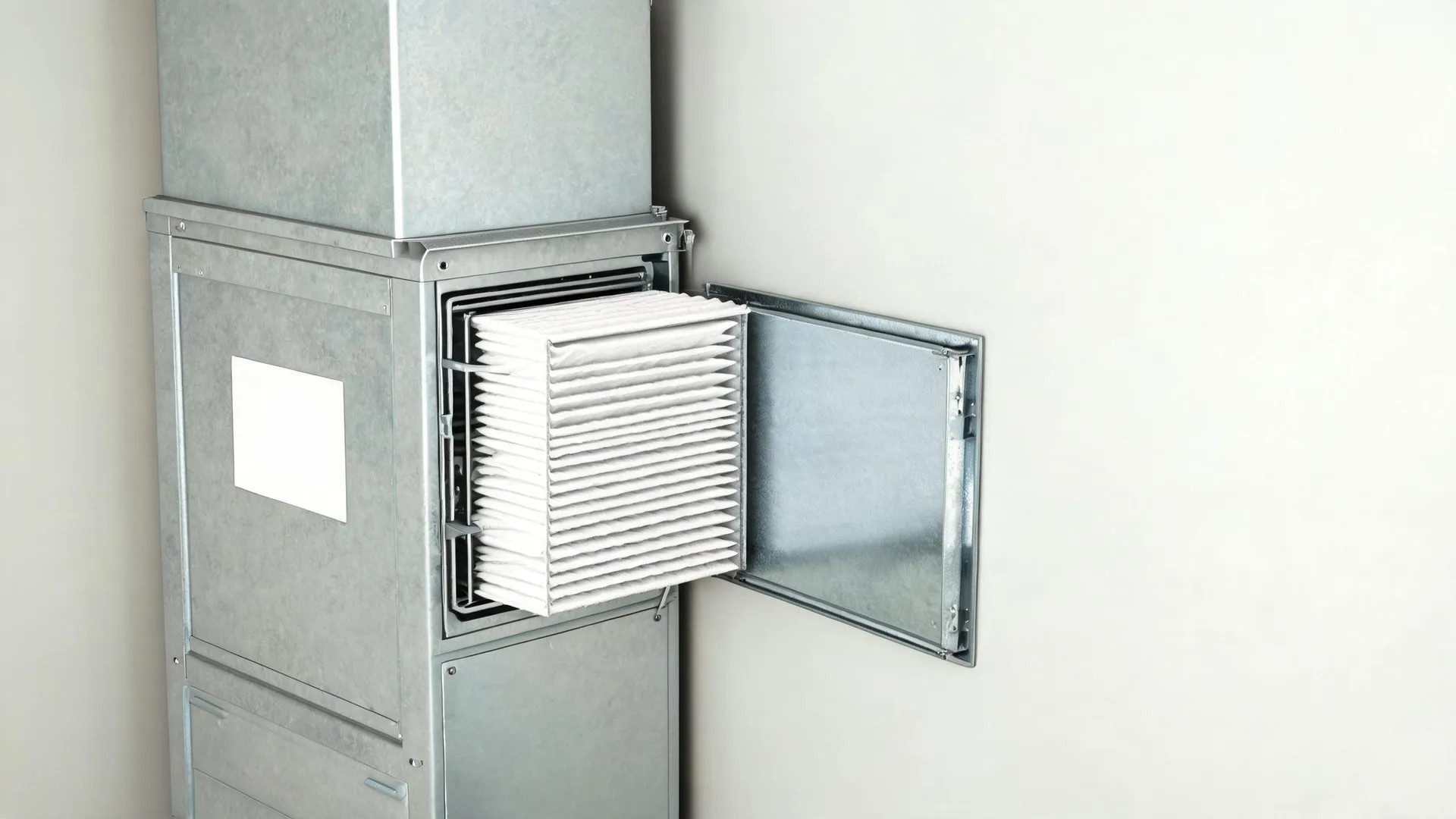
The filter is the one part that's on you. Pull it out every month and hold it up to the light. If you can't see light through it, it's blocking airflow, and a system that can't pull air through a clogged filter runs longer to do the same job. Rinse or replace it and put it back in the right way, arrow pointing toward the unit. Outside, keep the area around the condenser clear. Leaves, cut grass, a stack of anything piled against the cabinet all block the airflow it needs to dump heat. A few feet of open space on every side is enough. Inside, check that the drain line isn't backing up. If you see water pooling near the air handler, that line is clogged and needs attention before it causes real damage. Beyond that, leave the coil, the refrigerant and the electrical connections to the technician. Those take tools and training to check safely, and a system running nonstop doesn't give you a season to catch up if something's missed.

Warm air from the vents

If the air coming out doesn't feel noticeably cooler than the room, the system is struggling. It could be a weak refrigerant charge, a failing compressor, or a coil so dirty it can't pull heat out of the air anymore. Any of those gets worse the longer it runs unchecked.
Short cycles or a system that won't stop

An AC that clicks off a few minutes after starting is losing a fight somewhere, usually a dirty coil or a sensor reading wrong. One that runs nonstop and still can't hold the temperature is working against something, often low refrigerant or a blocked return. Both wear the compressor down faster than normal operation would.

A tune-up gets inside the cabinet in ways a homeowner never does. The technician pulls the panel and checks the capacitor, the part that gives the compressor and fan motor the jolt they need to start. A capacitor can test weak long before it fails outright, and a weak one makes the compressor strain every time it kicks on. They'll check the contactor too, the switch that sends power to the outdoor unit, since its contacts pit and burn a little more with every cycle. None of this shows up as a symptom until the day it does, usually with the system not starting at all. A tune-up catches it while it's still a quick fix instead of a no-cool call.

A proper tune-up starts outside. The technician washes out the condenser coil, because a coil caked with dust and grass clippings can't shed heat no matter how much refrigerant is in the lines. They check the refrigerant charge against what the system calls for rather than just topping it off. Too much refrigerant strains the compressor the same way too little does. The fan blade gets checked for wobble, and the blower wheel inside gets a look too, since a dirty blower pushes less air without the motor sounding any different. The drain line gets flushed so it can't back up later. Connections get snugged down, and the capacitor gets tested under load, not just eyeballed. Each one of these is a separate way the system can fail if it gets skipped.