




A quiet residential street at dusk lined with lit two-story coastal houses and tall palm trees.

AC Repair in Honolulu, HI

Tell us about the job

Takes about a minute. No obligation.

RepairCentral ACHonolulu County, HI
Step 1 of 2

What ZIP code is the job in?

Your AC runs every month of the year here. There's no spring or fall where it gets to sit idle, just afternoons averaging 85°F all through June, July and August, and plenty more months of work besides. That kind of year-round load wears on a system faster than the on-and-off schedule most of the country gets. When something starts acting up, it's usually that steady workload catching up with a part, not a one-time fluke.

85°F
the average summer afternoon it cools against
1 hail events
in ten years, and hail bends the fins on outdoor coils
58 wind events
in ten years, and wind drives debris into outdoor units
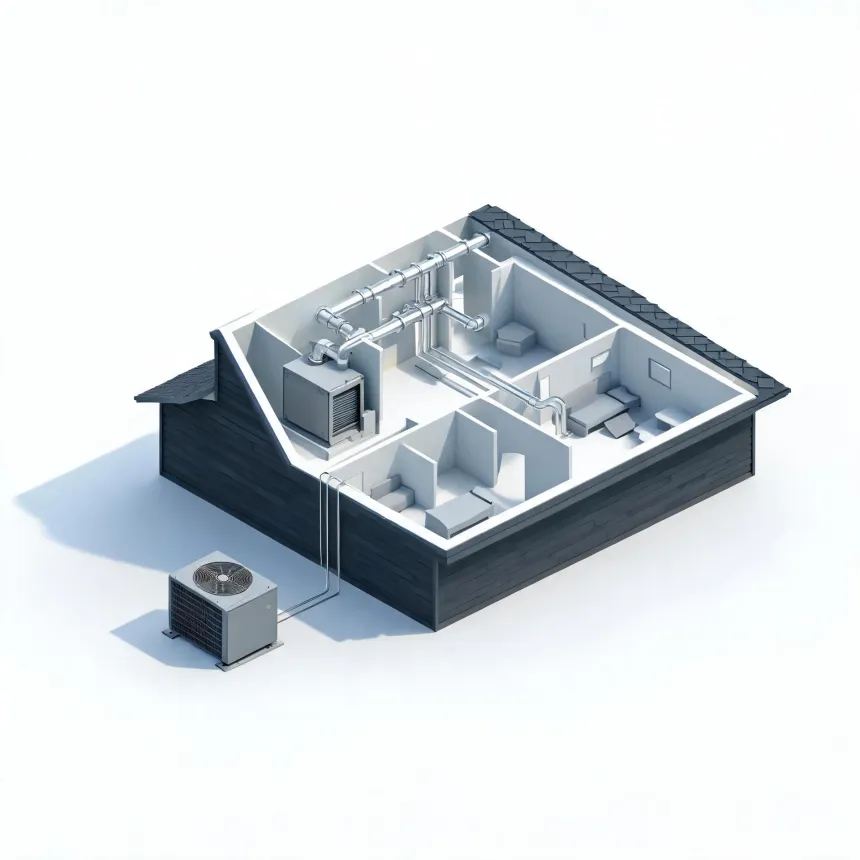
Isometric 3D cutaway render of a house with dark siding showing interior rooms, ductwork and an air handler, connected by lines to an outdoor condenser unit on a white background.
Your air conditioner works hardest from March through December.

NOAA 1991–2020 monthly normals

Electricity in Hawaii runs 42.86 cents per kilowatt-hour, close to the highest rate in the country.

A struggling AC unit burns more of that expensive power every month it goes unfixed.

The same system, worn by the same year-round heat, in houses old or new

Half the homes here were built by 1977
Summer afternoons average 85°F
Power costs 42.86 cents a kWh statewide
Still running, still wearingWhatever's going wrong has been building under a load that never lets up.

A unit that's short cycling or low on charge doesn't just cool poorly, it pulls more power to do less. At the rate Hawaii homes pay, that difference shows up on the bill fast. Waiting a billing cycle to see if the noise or the warm air sorts itself out usually means paying more for worse cooling the whole time. Getting a contractor out to look at it sooner costs you one visit instead of a string of expensive months.

Get it diagnosed properly

Your air conditioner works hard here, and that's usually what's behind the problem. Have it diagnosed properly so the fix lasts.

Find a contractor
A man in a cap and work jacket, seen from behind, carries a canvas tool bag up wooden porch steps toward a red front door.
An outdoor air conditioning condenser unit mounted on a concrete pad surrounded by gravel, photographed against a partly cloudy blue sky.

Keep running it, and a small problem picks the next part to take down

A compressor that's struggling doesn't fail all at once. Low refrigerant charge makes it run hotter than it was built to run, and that heat breaks down the oil that keeps its internal parts moving against each other. A capacitor that's starting to weaken makes the compressor and fan motors draw harder on startup, and that extra draw wears the windings a little more each time it happens. None of this shows up as a sudden stop. It shows up as longer run times, weaker cooling, and a system working harder to do less, right up until the part it was straining finally gives out. Catch it early and the fix is usually a part. Wait, and the part that gives out is often the compressor itself.

Dirty coils and starved airflow

A condenser coil caked with dirt and debris can't shed heat the way it's supposed to, so the system runs longer and the compressor works harder for the same result. A clogged filter does similar damage from the other end, starving the evaporator coil of airflow until it ices over. Either way, the fix starts with something as simple as a clean coil or a new filter, but ignored long enough, both paths lead back to the compressor.

Capacitors and contactors wear out on schedule

The run capacitor gives the compressor and fan motors the jolt they need to start turning, and it weakens a little every time it fires, until one day it can't deliver enough and the motor just hums or won't start at all. The contactor that switches power to the outdoor unit pits and burns with every cycle too. Both are wear parts with a normal lifespan, not signs anything was built wrong.

Aerial view of a gray outdoor air conditioning condenser unit mounted on a concrete pad next to a house with vinyl siding.

A new air conditioner would cut about $170 a year off cooling for a typical Honolulu County home.

  • A new one at the federal minimum, 14.3 SEER2$1,120 a year
  • An older air conditioner$1,290 a year

Estimates for a typical Honolulu County home, compared with an older unit built to the previous federal minimum, from EIA household energy data, Hawaii fuel prices and NOAA climate normals. Your home will differ.

Repair makes sense when a part like a capacitor or contactor has failed.

Replacement makes sense when the compressor has failed or the system uses R-22 refrigerant, which is no longer made.

Age matters less than what the system has been through, but it still tells you something. A compressor that's original to the house has had years of starts and stops to wear its internal parts, so when it's the compressor failing, replacement usually makes more sense than a repair that just buys a little time on a part that's already logged that much work. A capacitor, contactor, or fan motor is a different story. Those fail on their own schedule no matter how old the system is, and swapping one back in brings a unit that cools fine right back to normal. The condition worth asking about isn't just what broke, it's whether this is the first thing to go wrong or the latest in a string of them.