Cooling runs all year here
Kahului homes run air conditioning in every month, not just summer. The afternoon high averages 81°F through June, July and August, and the unit never gets a stretch of months off to recover.
Takes about a minute. No obligation.
Kahului homes run air conditioning in every month, not just summer. The afternoon high averages 81°F through June, July and August, and the unit never gets a stretch of months off to recover.
A compressor or capacitor that runs year round logs more hours than one that gets shut off for part of the year. Problems that would take years to show up elsewhere turn up earlier in a system working this schedule.

NOAA 1991–2020 monthly normals
Electricity in Hawaii runs 42.86 cents per kilowatt-hour, among the highest rates in the country.
An AC that's low on charge or short cycling burns through that expensive power every day it runs this way.



A system that's low on charge or short cycling doesn't just cool poorly, it runs longer to make less cold air, and every hour of that gets billed at 42.86 cents a kilowatt-hour. Waiting a few weeks to call someone out means a few more weeks of paying that rate for a machine that isn't doing its job. A technician can check the charge and the cycling in one visit and tell you which one it is. Fixing it stops the waste right away, at today's rate, not whatever it climbs to later.
If your house went up in 1985 or later, the unit is likely well within its working life. A technician can fix what's wrong with it instead of starting over.
Find a contractorA refrigerant leak doesn't hold steady. The system keeps running low, the compressor works harder to move what charge is left, and the metal at the leak point keeps losing refrigerant through the same weak spot. A failing capacitor is the same story. It starts the compressor hard instead of smooth, and that hard start wears the windings a little more each time until the compressor stalls on start or trips its overload. A dirty coil traps heat the system needs to shed, so the compressor runs hotter than it was built to, every cycle, until something in it gives out. None of this fixes itself by running less or running more. The part in trouble stays in trouble and gets closer to failing outright the longer it works under the same strain.
The capacitor gives the compressor and fan motor the jolt they need to start turning. A weak one still starts them most of the time, just slower and rougher, until one day it doesn't. You'll hear a hum, or the outside unit will click and not start, before it quits for good.
A system low on charge has a leak somewhere in the line set or coil. Topping it off brings the cooling back for a while, but the same leak is still there, and the level drops again. Finding and sealing the leak is the only way it stops happening.
Estimates for a typical Maui County home, compared with an older unit built to the previous federal minimum, from EIA household energy data, Hawaii fuel prices and NOAA climate normals. Your home will differ.
Repair makes sense when a part like a capacitor or contactor has failed.
Replacement makes sense when the compressor has failed or the system uses R-22 refrigerant, which is no longer made.
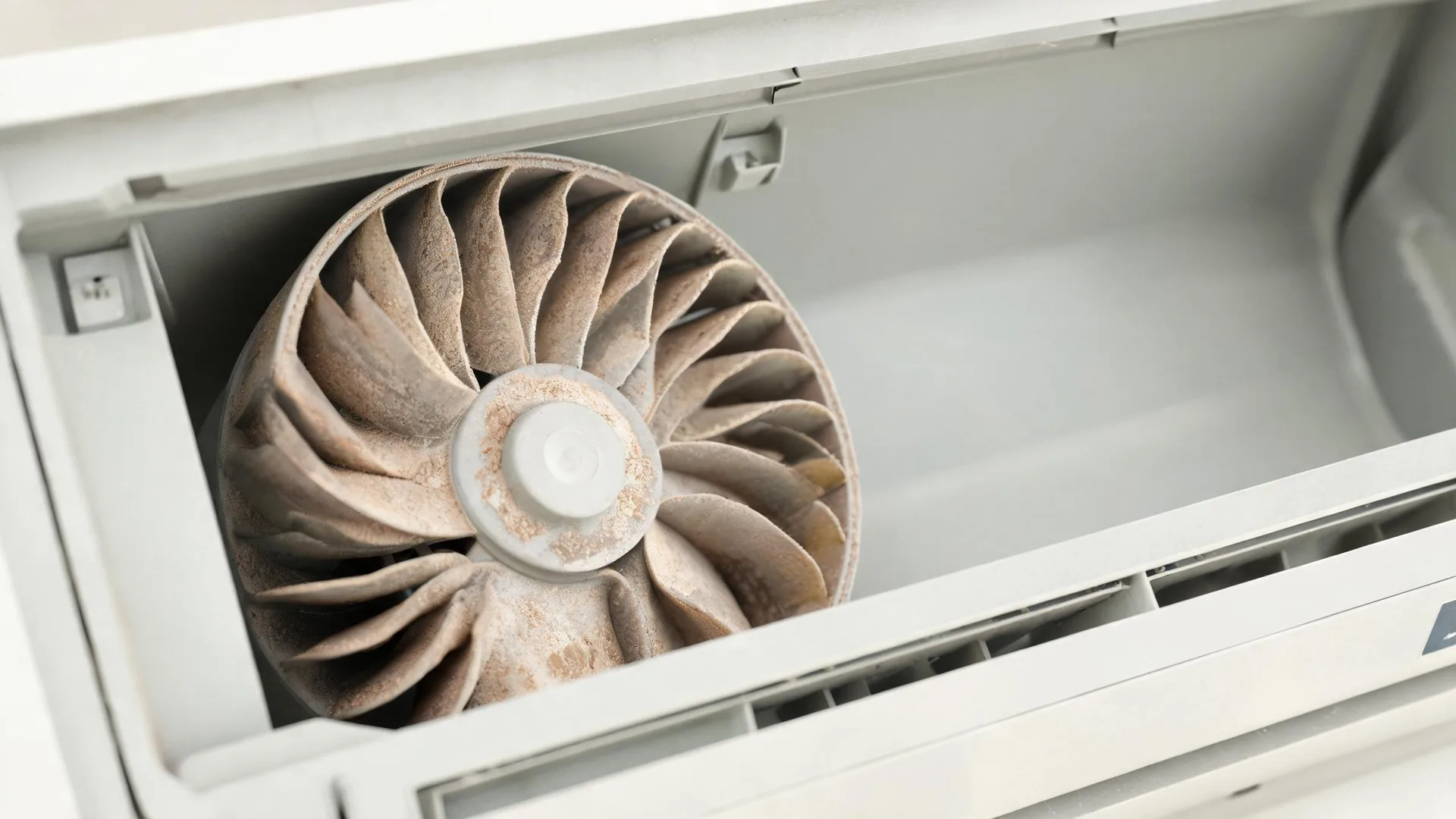
Repair or replace usually comes down to what's actually failed, not how old the unit is. A capacitor, a contactor, a fan motor, a blower wheel, these are normal wear parts and swapping one out is a repair like any other. A compressor is the one part that changes the math, since it's the most expensive thing in the system and replacing it alone can cost close to a new unit once labor and refrigerant are added in. So the real question isn't whether something broke, it's what broke. A technician checking a system that won't cool should be able to tell you which part failed and whether that part is worth fixing on its own.