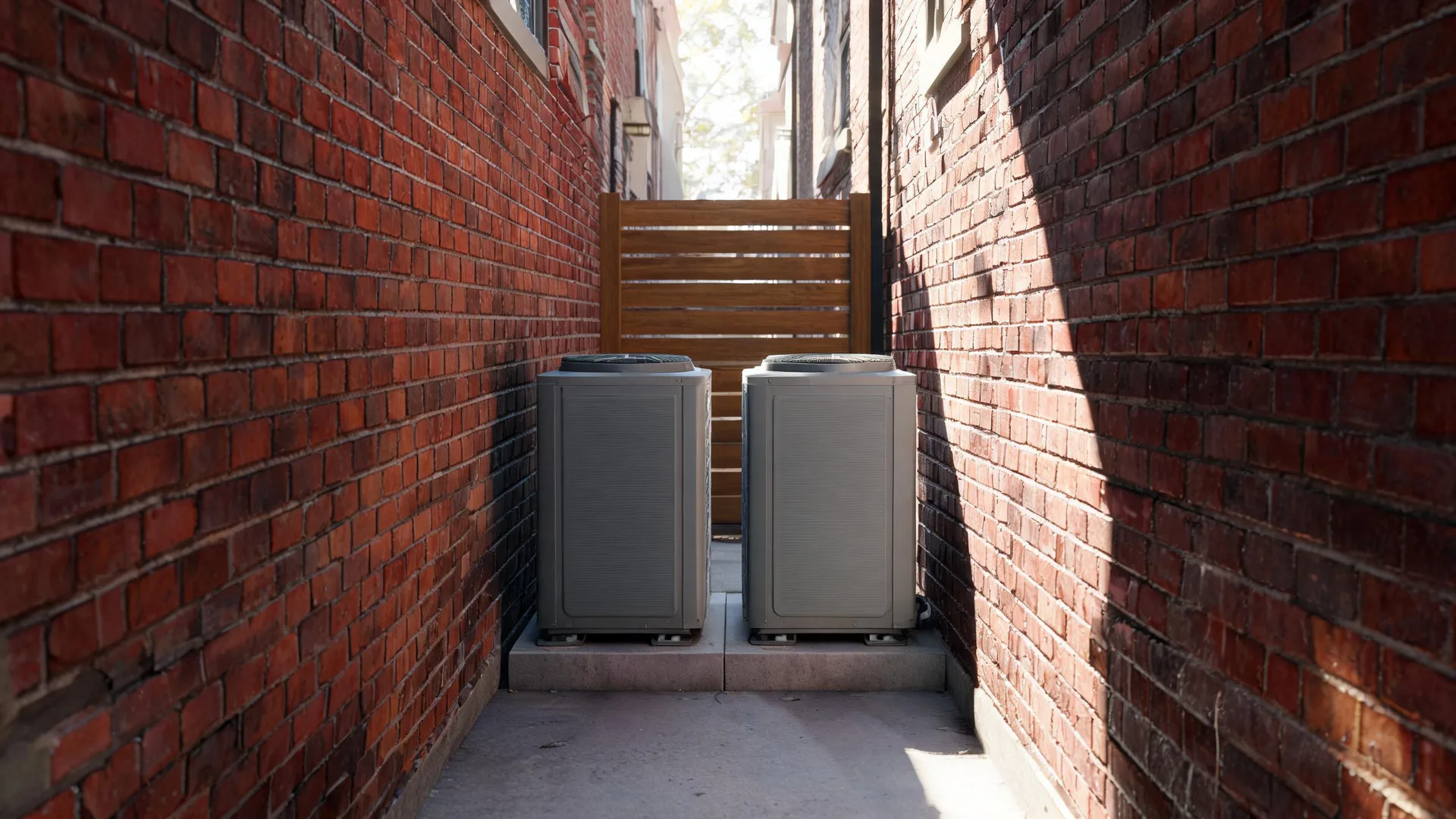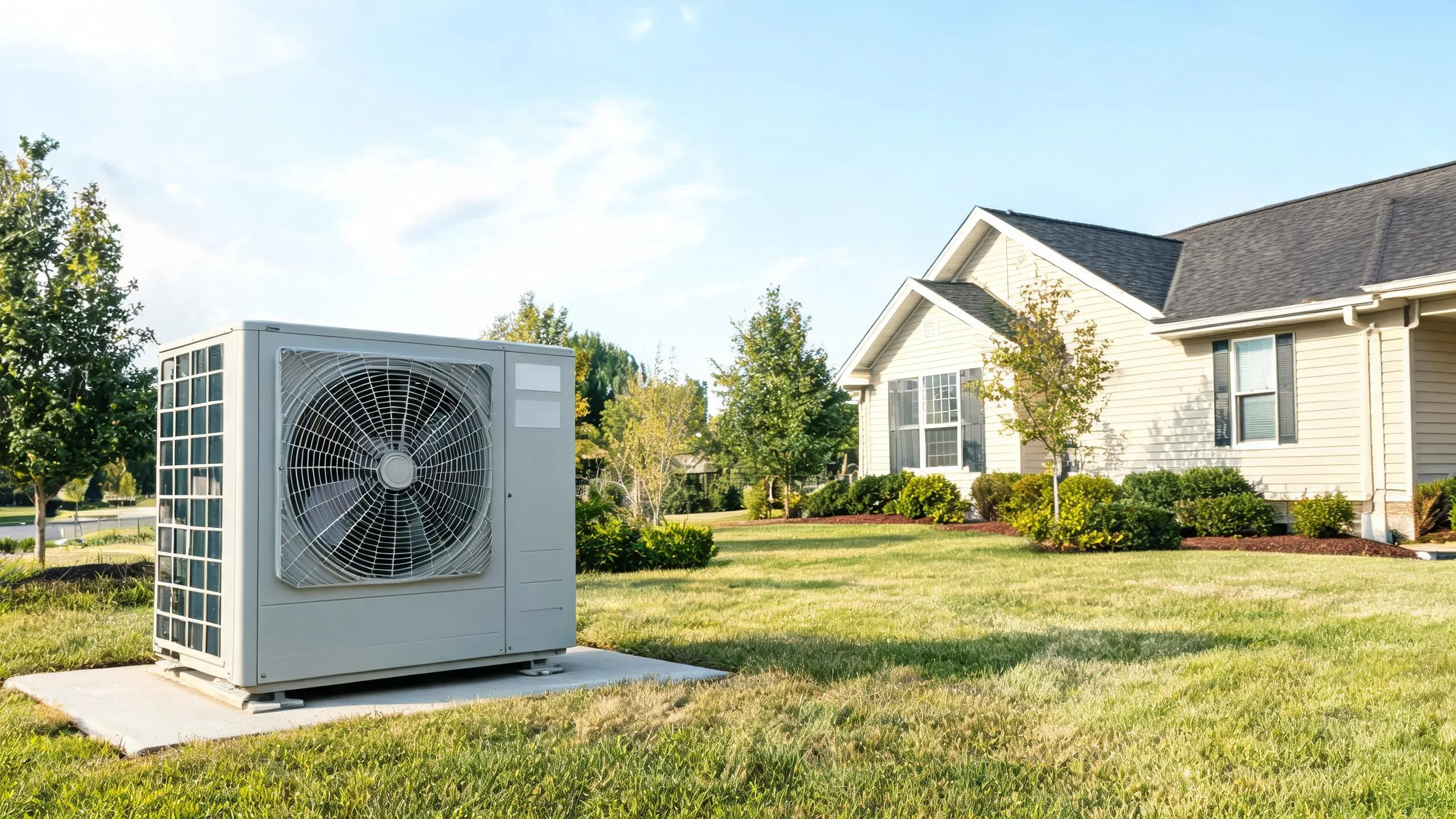
A grey heat pump outdoor unit mounted on a concrete pad in a suburban backyard, with a single-storey house visible behind it.

Heat Pump Repair in Kahului, HI

Tell us about the job

Takes about a minute. No obligation.

RepairHeat PumpMaui County, HI
Step 1 of 2

What ZIP code is the job in?

Half the homes in Maui County were built in 1985 or later

Kahului sits in a county with a lot of newer housing. If your house dates from 1985 or later, the heat pump that came with it is often younger than homeowners assume when something starts acting up.


A newer system is usually worth fixing

A heat pump installed with a newer build still has working life left in it. When it breaks down at this stage, that's more often a single bad part than the system wearing out, which favors repair over replacement.

59°F
the average winter night it heats against
81°F
the average summer afternoon it cools against
Isometric cutaway illustration of a single-story house showing interior rooms with ductwork, an indoor air handler unit, and an outdoor condenser unit connected by lines along the exterior wall.

A heat pump that keeps the house at the wrong temperature isn't always low on refrigerant.

A stuck reversing valve can leave it blowing cold air when it should be heating, and that's a repair, not a recharge.

A Kahului heat pump breaking down isn't a sign of a hard climate, just a part that's failed

Power costs 42.86 cents a kWh statewide
Climate zone 1A
Half the homes here were built by 1985

If your house came with a heat pump already installed, get the model number before you call anyone. It's usually on a plate on the outdoor unit. A contractor can use it to tell you how old the system actually is, instead of guessing off the age of the house. That one piece of information changes the conversation. A tech walking in knowing the unit is a few years old is going to look for the failed part first, not talk you into a new system.

Repair it

If your system came with a newer house, it likely has plenty of life left. Repair is usually the right call.

Find a contractor
A gray heat pump outdoor unit mounted on a concrete pad next to a residential house with lap siding and stone accents.

Running both ways, all year

A heat pump runs in both directions all year, switching between heating and cooling, and the reversing valve that makes that switch is one of the more common parts to fail over time. The outdoor unit takes the brunt of the wear too. Its fan motor and the capacitor that starts it sit outside in the weather all year, and a capacitor usually weakens gradually rather than failing all at once. That shows up as a unit that hums but won't start, or one that shuts off sooner than it should. Low refrigerant is a different kind of problem. It isn't wear, it's a leak somewhere in the coil or the line set, and it will keep coming back until that leak gets found and sealed. None of this means the system is at the end of its life. Most of these are single-part failures on a machine that's otherwise sound.

Check the thermostat and the breaker first

Make sure the thermostat is set to the right mode and not just bumped off room temperature by accident, since that alone can look like a failure. Then check the breaker box for the outdoor unit and the air handler. A tripped breaker is worth resetting once. If it trips again right away, leave it off and get someone out rather than resetting it over and over.

Look at the outdoor unit and the filter

Walk out and look at the outdoor unit. Leaves, grass clippings or anything stacked against it can block airflow and make the system struggle or shut off on its own. Pull the air filter and hold it up to a light. If you can't see light through it, swap it or clean it. A blocked filter starves the system of airflow and can cause problems that look much worse than they actually are.

A heat pump that's struggling will keep trying to hit the temperature on the thermostat, and that means it keeps running longer instead of shutting off and resting. A weak capacitor under that kind of load wears out faster, not slower. A reversing valve that's starting to stick gets worse the same way, cycling back and forth under strain until it stops switching at all. Low refrigerant does its own kind of damage if it's ignored, since the compressor is built to run with a full charge and a system running low puts more strain on it with every cycle. None of these start out as compressor problems. Left alone, they can turn into one.

A diagnostic visit starts outside, at the unit itself. A tech will pull the panel and check the capacitor and the fan motor before touching anything else, since those fail more than people expect. Next comes the refrigerant charge, checked with gauges rather than guessed at, because a system can look fine and still be running low. If the complaint is warm air in heating mode or cold air in cooling mode, the reversing valve gets tested directly, usually by checking its coil and watching whether it actually switches when it's told to. Only after that does a tech open up the air handler to look at the coil and airflow. Most of this gets sorted out before anything is replaced.