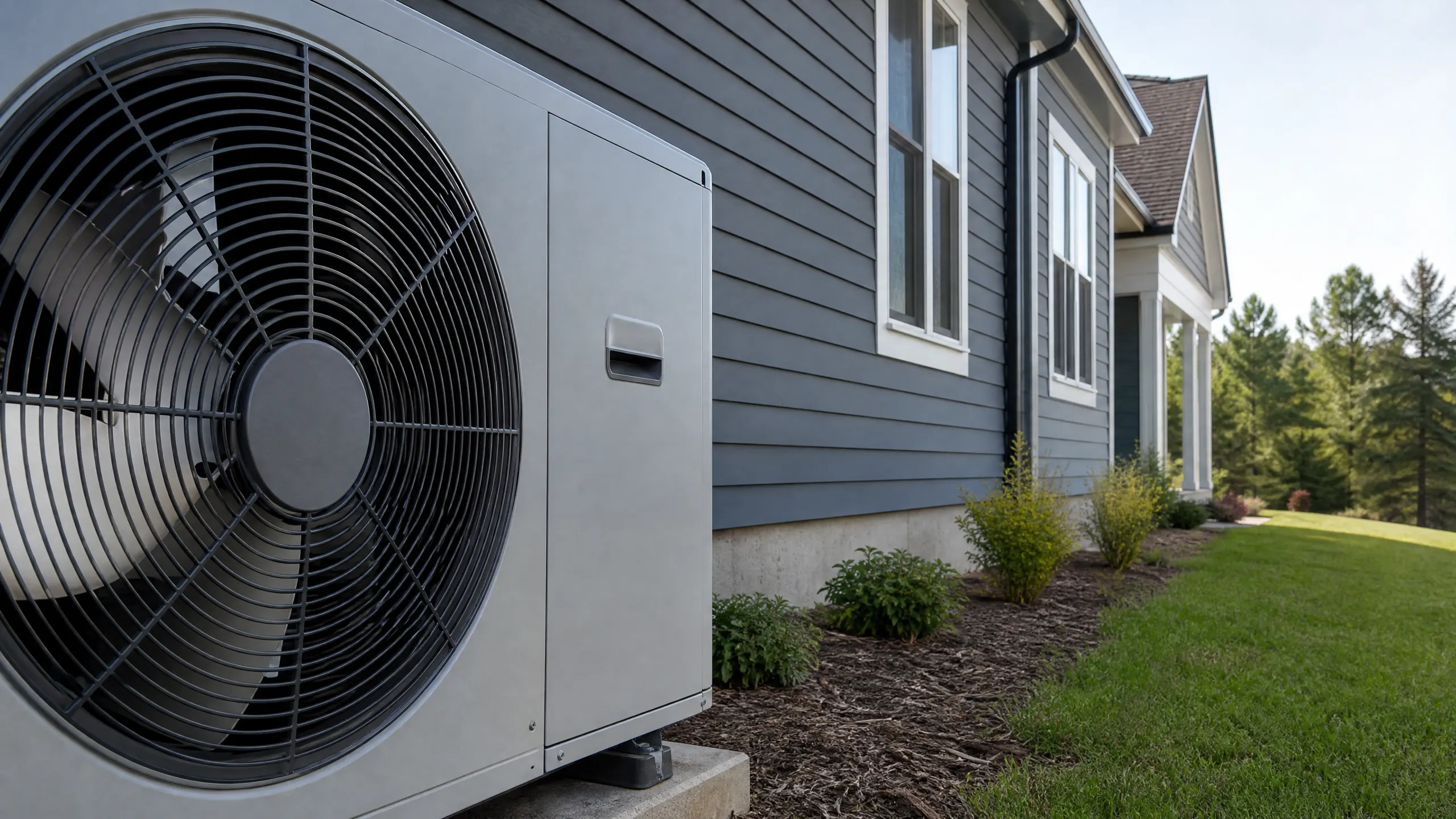
A heat pump outdoor unit mounted on a concrete pad next to the gray-sided exterior wall of a residential house.

Heat Pump Repair in Kapaa, HI

Tell us about the job

Takes about a minute. No obligation.

RepairHeat PumpKauai County, HI
Step 1 of 2

What ZIP code is the job in?

Half the homes here were built in 1983 or later

Kapaa's housing stock splits close to down the middle, half built in 1983 or earlier, half in 1983 or later. A heat pump that came with one of the newer houses hasn't necessarily been run into the ground.

Newer doesn't mean untouched

A heat pump still works for its living here, cycling on through warm, humid air most of the year. Even a system with years left can throw a bad capacitor or a dirty coil long before it's actually due for replacement.

62°F
the average winter night it heats against
83°F
the average summer afternoon it cools against
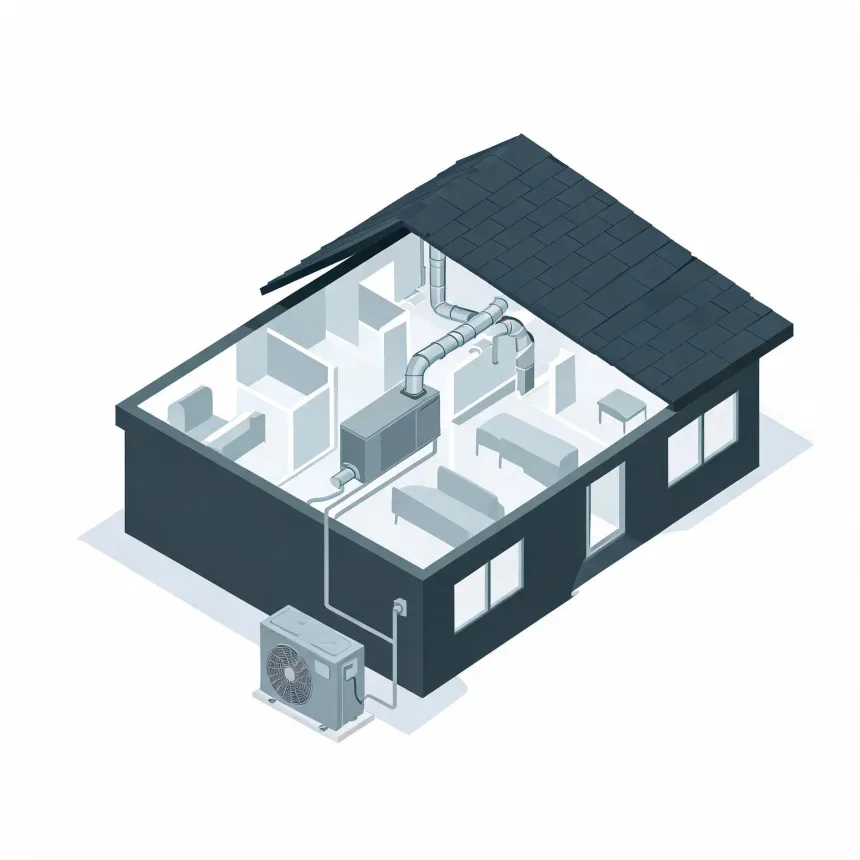
Isometric cutaway illustration of a single-story house showing interior rooms, ceiling ductwork connected to an air handler, and an outdoor condenser unit linked by a line set.

A heat pump that short cycles, turning on and off every few minutes, is wearing out a part faster than it should.

Short cycling like that puts the strain on the compressor, and the compressor is the part you don't want failing.

Hawaii runs electric, so a heat pump earns its keepHawaii homes paid 42.86 cents per kilowatt-hour in 2024, among the highest rates anywhere.

If your heat pump came with a newer house, call a repair out before you call for a replacement quote. A bad capacitor or a dirty coil looks like a bigger problem than it is, and either one gets fixed without touching the system itself. Ask the technician for the age of the unit if you don't already know it. That number, more than how the system is acting right now, tells you whether you're looking at a repair or a harder conversation down the road.

Repair it

If your system came with a newer house, it likely has plenty of life left. Repair is usually the right call.

Find a contractor
A man in a gray shirt, cap, and work pants carries a canvas tool bag up white porch steps toward a red front door, with a potted shrub beside the entry.
A dark gray heat pump unit mounted on a concrete pad next to a house with gray siding and a stone veneer wall.

What to check before the call

Before anyone comes out, go outside and look at the outdoor unit. If the fan isn't spinning and you don't hear a hum, check the breaker first. A tripped breaker isn't a repair, it's a switch to flip. While you're out there, look at the coil, the metal fins wrapping the unit. If it's packed with grass clippings, leaves or a layer of dirt, airflow is choking, and that alone can make a heat pump run constantly without heating or cooling the house right. Inside, pull the air filter and hold it up to a light. If you can't see light through it, swap it or clean it before anything else. A clogged filter starves the whole system of airflow and shows up as weak output, ice on the indoor coil, or a unit that won't shut off. If the thermostat screen is dim or blank, check the batteries before assuming the system itself is dead. None of this fixes a bad capacitor or a failing compressor, but it rules out the simple stuff first.

A refrigerant leak doesn't stay small

A heat pump low on refrigerant will keep running if you let it, but the compressor still tries to move the same amount of heat with less to work with. That makes it run hotter and longer than it should. Left alone, that heat is what wears out a compressor, and the compressor is the hardest part of the system to replace on its own.

Ice on the coil means stop, not wait

When the indoor coil starts icing over, airflow across it drops, so the ice spreads instead of melting. A system fighting its own ice buildup can't move heat properly no matter how long it runs. Keep it running and that ice can work its way toward the compressor, turning a coil problem into a compressor problem.

A repair doesn't tell you much by itself. A capacitor or a contactor wears out on its own schedule and swapping it brings the system right back to where it was. That kind of fix says nothing about what's coming next. What matters more is the pattern around it. A system that's been running fine and throws one odd failure is just a system that had a part wear out. A system that keeps coming back, a different problem each time, is wearing out in general, and the next repair is already waiting behind this one. Age plays into that too. An older compressor working harder to make up for a small refrigerant leak is further along that path than a newer one doing the same thing. The part failing in front of you matters less than whether it's the first thing to go wrong or the latest in a line of them.